Show Up On Site
Service before the sales deck — CSS gauges first.
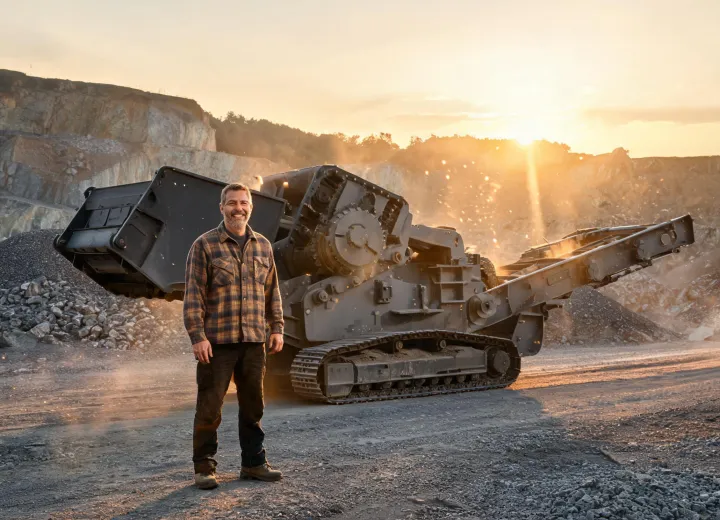
Our founder still rides a service truck two days a week — usually to a limestone pit or a recycled-concrete yard that hit a mantle throw mid-shift.
In 1989 a borrowed jaw and a cousin on the discharge conveyor produced the first Powerscreen-spec tonnage for a county road job. Forty years later the field van still rolls onto crushing pads with the same small-crew urgency: measure CSS, check vibration frequency, leave with a wear-part list the buyer can order before night shift.
If a quarry calls on Saturday with a stuck cone bushing, that is not a sales call — that is how we keep aggregate trucks moving on Monday.
Today Powerscreen runs three component rebuild shops, an operator-training bay for jaw and screen crews, and parts hubs along quarry-belt corridors from Washington and Texas through New England and the Mid-Atlantic. Procurement managers shortlist us when the tender needs CE 2006/42/EC paperwork and a published t/h map, not a glossy brochure.
We stay inside crushing and screening iron: jaw, cone, impact and screen circuits with published jaw opening, CSS and output capacity (t/h) classes. We do not pretend to be a full-line excavator or crane OEM. On primary selection we still argue both sides — jaw chambers for hard-rock uptime versus impact chambers when asphalt cubicity on soft feed matters more — and we refuse firm tonnage promises without F80, moisture and finished gradation from the quarry.
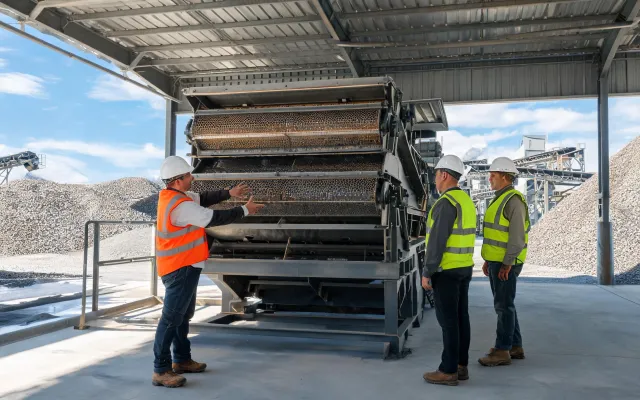
Three hundred twenty owner-operators certified each year on jaw relief settings, cone CSS discipline and screen media changeouts — mostly veterans and first-generation contractors.
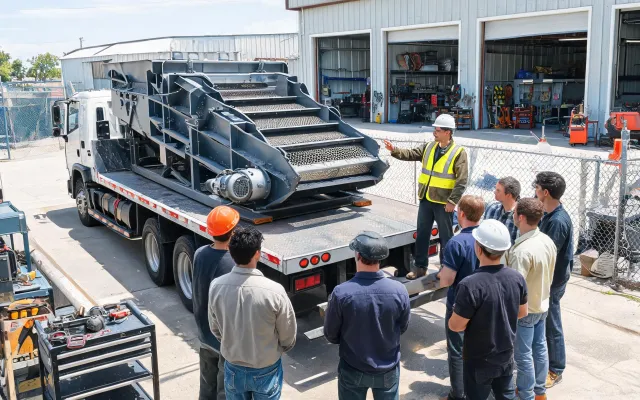
Twelve retired screen and conveyor modules donated to community-college trades programs so students practice media tensioning before their first quarry shift.
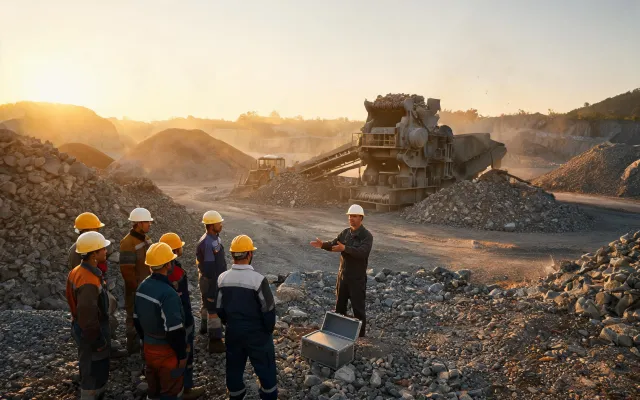
Quarterly toolbox talks for independent aggregate operators covering pull-cord interlocks, AS 4024 guarding and dust-suppression bowser placement.
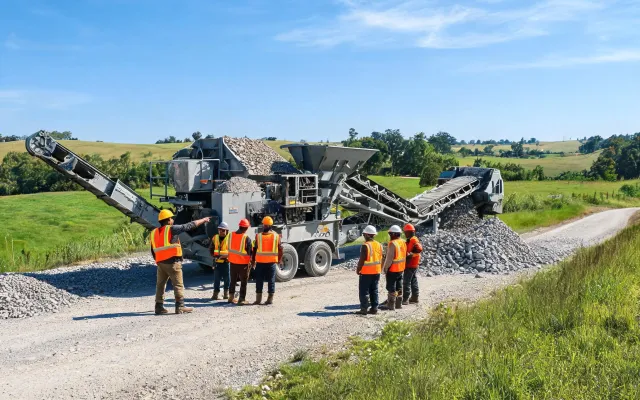
Crushing-crew shadowing for indigenous and rural contractors building tribal-land and county roads across the Southwest and Mid-Atlantic corridors.
Invite an application engineer to walk feed size, CSS and screen media life with your superintendent — then leave with a written wear forecast.