OEM vs Private Label Rock Crushers: What the Powerscreen Commander 510 Taught Me
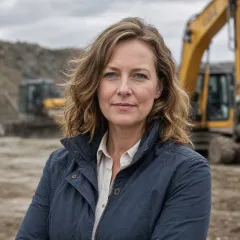
Charlotte Avery is an earth-moving machinery analyst covering excavators, mini excavators, loaders, skid steers, dozers, graders, compactors, and attachments. She uses ISO 6165 machine classification and ISO 20474-1 safety requirements while examining operating mass, rated payload, breakout force, ground pressure, stability, visibility, guarding, and attachment compatibility. Her work helps contractors and fleet buyers match machine size, undercarriage, transport limits, and protective features to terrain, duty cycle, and jobsite access.
In 2022, I had to choose between a used Powerscreen Commander 510 and a brand-new private label screening plant. On paper, the private label won: cheaper, slightly bigger screen, fresh warranty, and the dealer promised delivery in two weeks. I almost signed. Honestly, I almost signed.
I'm glad I didn't. Not because the private label machine was guaranteed to fail—it might have been fine. Because I was about to repeat the same mistake that cost me about $18,000 in lost production a few years earlier. I was comparing spec sheets instead of support chains.
Quick background: I've spent 11 years handling crushing and screening equipment orders for aggregate contractors. I've personally made—and documented—six significant buying mistakes, totaling roughly $340,000 in wasted budget by my own accounting. I keep the log so the team doesn't repeat them. This is the article I wish I'd been forced to read in 2017.
What I thought the problem was
The question everyone asks is OEM vs private label. Should we pay more for the original manufacturer, or take the private label and save money? That framing makes it sound simple. OEM equals safe but expensive. Private label equals risky but cheap. It was never that simple, and today it's less true than ever.
The 'private label means poor quality' idea is a legacy myth. It comes from an era when white-label manufacturing was mostly cheap copies of Western equipment. That's changed. Many factories now build to genuinely high standards, and even the major OEMs source components globally. So the old shortcut—'buy the logo and you're safe'—doesn't work the way it used to.
What was best practice in 2018 is not good enough in 2026. OEMs like Powerscreen now have part portals, remote diagnostics, and dealer networks with real inventory. Some private label distributors have also built serious support operations. The gap is basically local support vs no local support.
The real problem: accountability, not logos
Here's the thing that took me years to understand. When you buy from an OEM like Powerscreen, you're buying a product that has been through field testing, compliance reviews, and a dealer agreement. The price includes that structure. When you buy private label, the machine may be built by a perfectly good factory, but the support structure depends entirely on the person whose name is on the invoice.
Neither is automatically good or bad. But they are not comparable until you know who actually answers when the machine stops.
The spec sheet trap
The other problem hiding underneath is spec transparency. The ISO 21873-1:2015 standard (iso.org) covers mobile crusher terminology and commercial specifications. It helps, but it doesn't cover every screener spec, and even where it applies, sales sheets still play games.
One machine's 'feed capacity' assumes clean, dry aggregate. Another one assumes in-bank material with fines. I've seen a private label screen with a higher rated capacity than a Powerscreen Commander 510—which Powerscreen lists as a mobile screening plant—struggle with material that the Commander moved through easily. Not because the private label brand was bad, but because the numbers weren't comparable.
The same thing happens with rock crushers. I've compared a Powerscreen crusher and a private label unit with similar rated capacity, and the real-world throughput gap was huge. The brochure uses the same words. The reality is different.
What the mistake actually cost
In 2017, I made the classic first-year procurement mistake. I ordered a private label screening plant because it came in roughly 22% cheaper than the nearest OEM equivalent. The specs looked better. The warranty looked better. I ignored the only question that matters: what happens when it stops?
The machine ran well for the first six weeks. Then a shaft seal failed. The distributor had no local parts stock, no local technician, and no wiring diagram in the same time zone. The replacement part took 34 days to arrive. My cost estimate on that order showed about $18,000 in lost production before the repair. On a $210,000 machine, the 22% savings disappeared before the machine went back to work.
You're not buying a machine. You're buying a promise that someone answers the phone in five years.
I've also paid an OEM premium without getting much value. In 2022, I specified an OEM crusher for a project because the end client liked the brand on the side. The dealer was three hours away, didn't stock the wear parts, and took two days to return calls. The machine itself was excellent. The support was not. That taught me the logo is not a guarantee either.
So when someone asks me which rock crusher manufacturer is best, my answer is less exciting than they want: find the one with the best accountability chain for your material and your region.
The short version I use now
I'm not going to give you a long framework. This is the checklist I use on every quote now:
- Ask who actually manufactures the machine. If the seller can't name the factory or show proof of quality control, that's a red flag.
- Ask for a local parts list in writing. Not 'we can get parts'—what is in stock in your country today?
- Call the service line before you buy. If you don't get a human, assume the machine will fail at the worst time.
- Price machine, downtime, parts lead time, and resale value into the hourly cost. Not just the purchase price.
- Test on your worst material, not the ideal demo material.
The Powerscreen Commander 510 eventually won that 2022 order. Not because the logo said Powerscreen. Because the local dealer had screen media in stock, the service tech answered on the second ring, and they let me run the demo on the same wet, dirty aggregate I actually process. The private label dealer couldn't offer any of that.
That doesn't mean private label is automatically bad. Some of the best support I've seen came from a small distributor selling a private label line. But that support was local, stocked, and provable. That's the standard.
People search for 'rock crusher private label' because they want a practical alternative to an expensive OEM. That's fair. The label just doesn't tell you enough. The fundamentals haven't changed—a crusher or screener has to move material at a consistent rate, and when it doesn't, somebody has to fix it. What has changed is how you evaluate the 'somebody' part.
The OEM vs private label debate is the wrong argument. The real question is whether the company behind the machine has local proof. Start there, and the right rock crusher manufacturer becomes a lot easier to find.