Rock Crusher Wholesale Cost Guide: 7 Checks Before You Sign with a Powerscreen Dealer
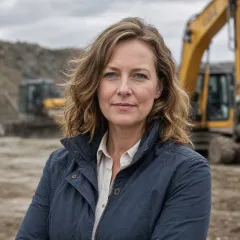
Charlotte Avery is an earth-moving machinery analyst covering excavators, mini excavators, loaders, skid steers, dozers, graders, compactors, and attachments. She uses ISO 6165 machine classification and ISO 20474-1 safety requirements while examining operating mass, rated payload, breakout force, ground pressure, stability, visibility, guarding, and attachment compatibility. Her work helps contractors and fleet buyers match machine size, undercarriage, transport limits, and protective features to terrain, duty cycle, and jobsite access.
-
Step 1: Match the Machine to the Material, Not the Brand
-
Step 2: Get the Full Spec Sheet — Not the Brochure
-
Step 3: Demand a Landed-Cost Quote, Not FOB
-
Step 4: Check the Dealer's Local Spare Parts Coverage
-
Step 5: Verify Compliance Documentation Before Delivery
-
Step 6: Run Buy vs. Lease vs. Finance — All Three
-
Step 7: Budget 15–20% Above the Quote
-
Common Mistakes That Cost You Money
Your quarry contract starts in six weeks. Your current plant can't hit the tonnage. Someone forwards you a "rock crusher wholesale cost guide" full of FOB prices with zero mention of freight, commissioning, or site prep. You stare at a $400K quote and wonder: is this the real number, or the opening bid?
That's what this checklist is for.
I coordinate emergency equipment orders for a supply company. Over the past 6 years I've handled 180+ rush orders — including same-day replacements for quarry operators mid-season. This is the checklist we run before we sign a PO on any rock crusher. Seven steps, roughly in order of importance. Skip one and you'll pay for it later.
Step 1: Match the Machine to the Material, Not the Brand
Jaw, cone, impact — they're not interchangeable. Picking the wrong type costs you uptime, and uptime is money.
Answer these three questions first:
- Material hardness. Granite vs. limestone is a bigger variable than Powerscreen vs. any competitor.
- Abrasiveness. High-silica feed eats jaw plates. Get this wrong and you're swapping liners every 300 hours.
- Target output size. 12mm and 40mm specs rarely come off the same chamber configuration.
Most buyers skip this and go straight to comparing brand quotes. Then they buy a "cheaper" unit and spend two years tuning it to do what the spec sheet promised. I watched a used jaw crusher priced 30% below market get scrapped because it couldn't handle the local granite. That wasn't a bad machine. It was a bad match.
In my first year doing this, I made the classic spec error: assumed "standard configuration" meant the same thing to every supplier. Cost me a $22K rework on a screen deck order. It doesn't.
Step 2: Get the Full Spec Sheet — Not the Brochure
A dealer sends you a two-page flyer that says "up to 400 tph." That's not a spec. That's marketing. Ask for the full sheet, and make sure these numbers are on it:
- Feed opening size and max feed size
- Production range — the working range, not the peak
- Transport dimensions and weight (this one gets skipped constantly)
- Engine power and emissions tier
- Hopper capacity and stockpile height
Here's the connection most people miss: transport dimensions determine your freight cost. A unit that looks perfect on paper may be over-width for your local roads, or need to be broken down for shipping. That adds thousands — sometimes tens of thousands — before the machine ever touches your site. The Powerscreen Chieftain 1700, for example, runs close to 3 meters in transport width. Plan for that upfront, not after the PO is signed.
Step 3: Demand a Landed-Cost Quote, Not FOB
This is the step people skip most, and it's the one that hurts most.
FOB price is the tip of the iceberg. Real total cost of ownership includes:
- Unit price
- Freight (ocean, inland, insurance)
- Duty and customs clearance
- On-site commissioning and operator training
- First batch of wear parts and spares
- Site prep — power, foundation, discharge pathway
The worst case I've seen: a client had two quotes. Vendor A at $280K FOB. Vendor B at $310K FOB. He was about to sign A. We pushed him to build landed-cost quotes for both — A landed at $365K, B at $342K. That's a $23K swing, driven entirely by freight and clearance. The "cheaper" quote wasn't cheaper.
Unit price is the tip of the iceberg. TCO includes unit price + surcharges + time cost + risk cost + rework cost. The lowest unit price often carries the highest total.
Step 4: Check the Dealer's Local Spare Parts Coverage
Once the machine is on site, the number that decides whether you make or lose money is downtime days.
Before you commit, call the dealer and ask three questions:
- Are jaw plates, bushings, and hydraulic pumps for this model in your local warehouse right now?
- What's the fastest you can move a large component from your regional hub to my site?
- Do you have field engineers who can do on-site response?
Those three answers matter more than the unit price. Three days of downtime on a mid-size quarry operation can wipe out your entire purchase negotiation win.
This is where the "local is always faster" belief breaks down. That was true 10 years ago when logistics and communication were slower. Today, a well-organized remote dealer with a real inventory system can beat a local dealer whose warehouse is chronically out of stock. Look at inventory data, not distance.
Step 5: Verify Compliance Documentation Before Delivery
CE marking for EU entry. EPA emissions tier for North America. These aren't negotiable checkboxes — they're hard gates.
Ask the dealer for:
- Machinery Directive declaration of conformity
- Noise and vibration test reports
- Engine emissions certification (Stage V / Tier 4 Final, depending on region)
- Electrical system certification where applicable
Missing paperwork means the machine sits at port or gets flagged on site. I've seen a case where a client's engine emissions tier didn't match the destination market. The shipment sat for 27 days. Demurrage plus penalties cost more than the difference between the two quotes he was originally comparing."
Step 6: Run Buy vs. Lease vs. Finance — All Three
Don't default to "buying is best." It isn't always.
A rough rule of thumb:
- Project duration under 18 months with no pipeline certainty: lease or finance
- Project duration over 3 years with a stable feed source: buy
- In between: run IRR, don't guess
Powerscreen Chieftain 1700 pricing on the new market landed around $250K–$450K as of early 2025, depending on configuration, region, and dealer. Used units typically sit between $120K and $280K, driven by hours, wear, and service history. Those are publicly listed reference ranges, not final numbers — your deal depends on volume, payment terms, and what your local dealer has sitting in inventory.
Powerscreen crushers — jaw and cone series — span an even wider price range depending on chamber, drive, and screening add-ons. This is why comparing two "identical" machines by sticker price usually produces a meaningless result.
Here's the thing nobody says out loud: expensive vendors don't deliver better quality because they're expensive. Quality vendors can charge more because they deliver. The causation runs the other way. Don't use price as a quality proxy — use specs and references.
Step 7: Budget 15–20% Above the Quote
Not the answer anyone wants, but it's the one that keeps projects alive.
Take your landed-cost quote and multiply by 1.15 to 1.20. That's your real capital requirement. The extra covers:
- Freight delays and on-site waiting time
- Site prep surprises (buried lines, inadequate load-bearing)
- Extra operator training days during commissioning
- Accelerated first-batch wear parts
I watched a $420K landed quote close out at $487K. The $67K overage came entirely from the list above. The project didn't blow its budget because the client had already provisioned 20% headroom.
Common Mistakes That Cost You Money
Checklist done. Now the traps that catch people anyway:
- Comparing only unit price, ignoring wear-part cost. A 40% delta on jaw plates can, over three years, add up to the price of a small machine.
- Believing "in stock" means "on site next week." In stock usually means "in the dealer's warehouse." From there to your site you still have freight, clearance, and commissioning.
- Ignoring the rain season and your construction window. A machine that arrives fast still can't work if your site is underwater.
- Buying third-party replacement wear parts to save a buck. OEM warranties generally don't cover damage caused by non-OEM components. The $3K you saved becomes a $40K repair.
- Treating a screener as a crusher for price comparison. The Powerscreen Chieftain series is a screening plant, not a crusher. Mixing the two into one comparison produces numbers that mean nothing.
One last note on supplier selection: I wouldn't fixate on where a rock crusher supplier is headquartered. Some brands headquartered overseas run strong local dealer operations — parts inventory, field engineers, service response — and outperform bigger names with weak regional coverage. Check the local service footprint, not the logo on the marketing deck.
Total cost thinking doesn't mean buying the most expensive option. It means calculating every dollar you'll spend — from signature to end of lifecycle — plus the downtime days and risk you're carrying along the way. Once you've done that math, the cheapest quote usually stops looking cheap.