Powerscreen Crusher Procurement: Cone Crusher OEM vs Private Label
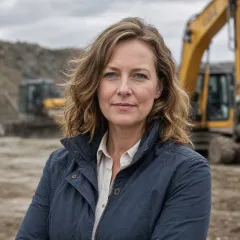
Charlotte Avery is an earth-moving machinery analyst covering excavators, mini excavators, loaders, skid steers, dozers, graders, compactors, and attachments. She uses ISO 6165 machine classification and ISO 20474-1 safety requirements while examining operating mass, rated payload, breakout force, ground pressure, stability, visibility, guarding, and attachment compatibility. Her work helps contractors and fleet buyers match machine size, undercarriage, transport limits, and protective features to terrain, duty cycle, and jobsite access.
February 2024: Two quotes, one bad assumption
I manage procurement for a 180-person quarry services company. I have owned our maintenance and equipment budget ($420,000 annually) for seven years. I have negotiated with more than 40 vendors, and I log every order in our cost tracking system.
In February 2024, we needed a mobile cone crusher for our third pit. We already ran Powerscreen crushing equipment—a jaw and a screener—so I knew the baseline. I requested quotes through a Powerscreen crusher distributor and a crusher wholesale broker. The broker came back with a private-label cone crusher. On paper, it was 18% cheaper. I almost signed it.
The low quote looked clean. That was the problem.
Look, I am not saying private-label crushers are junk. That would be lazy. For some operations, they make sense. But our operation runs 1,600 hours a year. Downtime does not care about purchase price.
I built a TCO sheet. I added freight, installation, wear parts, planned maintenance, unplanned downtime, compliance documentation, and resale. The private-label quote was still lower up front. But the parts line was ugly.
According to Powerscreen's official site (powerscreen.com, accessed April 2026), the Powerscreen 1000 Maxtrak is a mobile cone crusher designed for secondary and tertiary crushing. Powerscreen also lists authorized distributors through its dealer locator (powerscreen.com/dealers, accessed April 2026) for parts and service support.
I asked the private-label broker three questions: Who stocks cone liners? What is the guaranteed response time? Can you show Tier 4 Final / EU Stage V compliance for this engine configuration? The answers were soft. Not fake. Just soft.
If I remember correctly, the liner lead time was quoted at four to six weeks. I want to say the service response was 'next available technician,' but don't quote me on that. Either way, it was not a number I could put in front of my plant managers.
The warning I almost ignored
They warned me about this. A veteran operator told me: 'Check the liner lead time before you check the price.' I nodded and nearly ignored him. In 2023, we had an 11-day shutdown waiting on a hydraulic hose for a different machine. That one mistake ate our quarterly maintenance cushion. I should add that we still had a backup plant, so the real loss was smaller than it could have been. But it hurt.
That was my reverse validation. I only believed the advice after ignoring it once and eating a costly delay. This time, I did not want to repeat it on a cone crusher.
March 2024: The spreadsheet meeting
I took the decision to our plant managers. One wanted the private-label unit because the up-front gap was real. Another asked a simple question: 'What happens when the mantle wears out in month seven?' That question killed the cheap option. We called the broker. The answer was a four-to-six-week lead time and a technician from out of state. I should add that the broker was upfront about it. He did not lie. He just sold a different risk profile.
We compared eight vendors over three months. Not all were crusher distributors. Some were crusher wholesale brokers, some were OEM dealers, one was a rental company. I used a TCO spreadsheet with downtime cost per hour. I cannot share the exact downtime number, but it was high enough that a two-week delay erased the up-front savings.
Per EU Stage V non-road emission rules (Regulation (EU) 2016/1628, phased in from 2019), engine compliance has to match the market and application. We needed documentation, not a promise. The Powerscreen distributor had it. The private-label broker had to ask the factory. That extra step mattered because our tender required it.
Then we negotiated. Not on price alone. On parts stocking. On service response. On training. The distributor agreed to hold a set of critical liners at their local branch. That was worth more than another discount.
What changed my mind
The turning point was not the sticker price. It was the distributor model. A Powerscreen crusher distributor could give me a named parts contact, a local service footprint, and documented machine specs. The private-label broker could sell me a machine, but could not own the support relationship the way I needed.
I am not attacking private label as a category. If you run a low-hour operation, a short contract, or a non-critical pit, a private-label cone crusher might be the rational call. Honest limitation: if that is your situation, a Powerscreen OEM machine may be more machine than you need. I recommend Powerscreen crushing equipment for high-hour, production-critical, compliance-sensitive work. If you are in the other box, look at alternatives without guilt.
We chose a Powerscreen 1000 Maxtrak through an authorized distributor. It was not the lowest quote. It was the lowest risk we could defend.
The result
In Q2 2024, we put the Powerscreen cone crusher into service. The first scheduled liner change was handled by the distributor's local team. We tracked the order in our system. The machine has not been perfect—no crusher is—but the support has been predictable. Predictable beats heroic.
Here is the thing: the private-label quote was still a valid quote. It just was not a valid fit for us. That distinction matters when you are comparing cone crusher OEM vs private label.
Honestly, I am not sure why some private-label suppliers quote 10-day delivery and actually hit it while others slip to 30. My best guess is inventory depth and whether they control their own warehouse. I have never fully understood that side of the market.
What I would do differently
I would ask for TCO data earlier. I would make the distributor prove parts availability in writing. I would separate 'cheap to buy' from 'cheap to run.'
If you are sourcing through crusher wholesale channels or a crusher distributor, use a simple checklist:
- Who stocks wear parts, and where?
- What is the service response time in writing?
- Which emissions standard does the engine meet? Verify with the distributor.
- What is the resale history for this model?
- Can the dealer show you a machine running within 200 miles?
This was accurate as of Q1 2025. The market changes fast, so verify current pricing, lead times, and emissions requirements with a Powerscreen distributor before you budget.
Final lesson: OEM vs private label is not a religion. It is a risk decision. For our quarry, Powerscreen won because the dealer network made downtime less likely. For someone else, the answer may be different. That is fine. Just do not let a lower quote hide a higher risk.